Visita a "Mi museo", Granada, Nicaragua y la expocisición y catalogación de la Colección Ma. Augusta Peñalba.

Asociación ICONES Cooperación cultural para la transformación social.


9.16.2009
Museo de Cerámica precolombina de Granada, Nicaragua expone piezas de la Clección Maria Augusta Peñalba

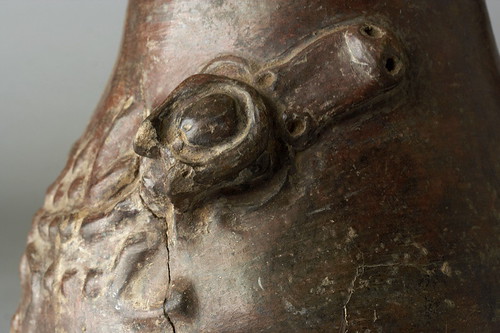
Con la cooperación de Icones y "Mi Museo" de Granada, Nicaragua se exhibe una selección de piezas de cerámica precolombina como parte de la expocisión temporal de la Colección Maria Augusta Peñalba.
ICONES junto a la Fundación el Sueño de la Campana, trabajan para que la totalidad de la Colección Maria Augusta Peñalba sea parte del proyecto de desarrollo y cultura del futuro Museo de las Culturas ancestrales de Nicaragua.
"Mi Museo" es una institución privada de carácter cultural que lidera la exposición e investigación de la cerámica y la lítica precolombina en Nicaragua.
La exposicion de las piezas fue distribuida en las cuatro salas de exhibicion del museo. En la sala 1: escudillas tripode papagayo y vallejo, vasijas bicromas bocana insiso, cuencos policromos papagayo, figurillas femenina papagayo.

SALA 2: cuenco policromo papagayo y luna, vasijas tricroma, vasija policroma papagayo, vallejo, galo, castillo esgrafiado.
SALA 3: cuenco policromo luna, papagayo, vallejo, pataky; escudillas tricromas tola, vasijas chavez blanco sobre rojo, lago negro modelado, castillo esgrafiado y murillo aplicado.

SALA 4: escudillas tripode bicroma chavez blanco sobre rojo, usulutan negativo, tola tricromo; cuencos tripode monocromo castillo esgrafiado, luna, chavez, potosi aplicado, papagayo; vasijas monocroma lago negro, murillo, sacasa estriado, bocana inciso; vasijas tripode usulutan negativo.
7.08.2009
Revista Mi Museo

Icones colabora con "Mi Museo" de Granada, Nicaragua para la exposición temporal de ceramica precolombina de la colección Maria Augusta Peñalba. Aquí pudes encontrar el último numero de la revista que edita este centro y donde aparece una reseña sobre la creadora de esta importante colección. Descarga la rvista en PDF
Algunas fotografias de la expocisión se pueden ver en la pagina web de "Mi Museo" Granada pulsando aqui
7.02.2009
Contraportada del Diario de Girona
´Que un Borbó vulgui fer callar un líder llatinoamericà és per nosaltres una tragèdia´
ENTREVISTA DE ALBERT SOLER GIRONA Avui finalitza a Cadaqués el II Cicle de Cinema Sudamericà, organitzat amb la col·laboració de la Càtedra Unesco de la UdG, ICONES y ARIAC. Sota el títol "Mirades veneçolanes", durant tres dies s'han projectat documentals d'aquell país, on Cabrera és reconegut realitzador.
Trobo a faltar alguna pel·lícula titulada Aló, presidente.
No, he, he, aquest festival no hi té res a veure. Ara bé, ja que parla d'aquell programa, haig de dir que la premsa estrangera en sol fer mofa, però és un treball molt interessant del president, explicant cada setmana què s'ha fet al país.
Què pensa de la imatge que es té a Europa de la Revolució i de Chávez?
Que està molt distorsionada. I no per casualitat, sinó expressament.
Amb quin objectiu?
Amb el d'obtenir els recursos veneçolans. El convido a llegir què deien els diaris europeus de Gandhi, quan aquest amenaçava l'imperi britànic. Veurà moltes semblances.
Què han portat a aquest festival?
Documentals i films que no formen part de la indústria de l'entreteniment, és cinema dedicat a rescatar la memòria històrica. Igual que fan vostès ara a Espanya.
No sé a Venezuela, però aquí hi ha gent que prefereix oblidar.
És clar, sempre hi ha persones que neguen la història, fins i tot l'ocorreguda set anys enrere.
Almenys és un canvi, passar d'exportar culebrons a documentals.
Té a veure amb amb el fet que una revolució de caire social generalment intentarà explicar a través de la seva producció audiovisual el que els mitjans de comunicació ocultaran.
No hi ha el perill d'oferir una sola visió de les coses?
No cregui. Hi ha revolucionaris també dins de la pròpia revolució, així que alguns documentals critiquen la revolució. A Venezuela hi ha canals de televisió que fa poc han dit que el president acabarà com Mussolini. I ni s'han tancat ni s'han perseguit.
A què li sonen noms com Repsol, Telefónica, Iberia...?
A confusió. Perquè sembla que estiguem parlant d'Espanya i en realitat són grups econòmics sense nacionalitat. Són poders que commouen la vida de milions de persones, gens democràticament.
Un film titulat ¿Por qué no te callas? seria una comèdia o un drama?
Per nosaltres és un drama. A Atahualpa el van fer callar els espanyols matant-lo. A Quatemoc el van fer callar també matant-lo. I a tants altres. Aleshores, que un Borbó vulgui fer callar un líder llatinoamericà per nosaltres és una tragèdia, perquè recordem com van acabar les altres ocasions.
És que Espanya té molt costum de fer callar, pregunti-ho per aquí.
(Riu) És clar, a Catalunya entera la van fer callar. Però ara parla.
Venezuela callarà?
Ah, no ho crec pas. Nosaltres no hem callat mai.
Què és actualment Espanya?
Un referent. Quan es va perdre a Espanya, el somni de la República se'n va anar a Amèrica gràcies als exiliats, els nostres avis.
ENTREVISTA DE ALBERT SOLER GIRONA Avui finalitza a Cadaqués el II Cicle de Cinema Sudamericà, organitzat amb la col·laboració de la Càtedra Unesco de la UdG, ICONES y ARIAC. Sota el títol "Mirades veneçolanes", durant tres dies s'han projectat documentals d'aquell país, on Cabrera és reconegut realitzador.
Trobo a faltar alguna pel·lícula titulada Aló, presidente.
No, he, he, aquest festival no hi té res a veure. Ara bé, ja que parla d'aquell programa, haig de dir que la premsa estrangera en sol fer mofa, però és un treball molt interessant del president, explicant cada setmana què s'ha fet al país.
Què pensa de la imatge que es té a Europa de la Revolució i de Chávez?
Que està molt distorsionada. I no per casualitat, sinó expressament.
Amb quin objectiu?
Amb el d'obtenir els recursos veneçolans. El convido a llegir què deien els diaris europeus de Gandhi, quan aquest amenaçava l'imperi britànic. Veurà moltes semblances.
Què han portat a aquest festival?
Documentals i films que no formen part de la indústria de l'entreteniment, és cinema dedicat a rescatar la memòria històrica. Igual que fan vostès ara a Espanya.
No sé a Venezuela, però aquí hi ha gent que prefereix oblidar.
És clar, sempre hi ha persones que neguen la història, fins i tot l'ocorreguda set anys enrere.
Almenys és un canvi, passar d'exportar culebrons a documentals.
Té a veure amb amb el fet que una revolució de caire social generalment intentarà explicar a través de la seva producció audiovisual el que els mitjans de comunicació ocultaran.
No hi ha el perill d'oferir una sola visió de les coses?
No cregui. Hi ha revolucionaris també dins de la pròpia revolució, així que alguns documentals critiquen la revolució. A Venezuela hi ha canals de televisió que fa poc han dit que el president acabarà com Mussolini. I ni s'han tancat ni s'han perseguit.
A què li sonen noms com Repsol, Telefónica, Iberia...?
A confusió. Perquè sembla que estiguem parlant d'Espanya i en realitat són grups econòmics sense nacionalitat. Són poders que commouen la vida de milions de persones, gens democràticament.
Un film titulat ¿Por qué no te callas? seria una comèdia o un drama?
Per nosaltres és un drama. A Atahualpa el van fer callar els espanyols matant-lo. A Quatemoc el van fer callar també matant-lo. I a tants altres. Aleshores, que un Borbó vulgui fer callar un líder llatinoamericà per nosaltres és una tragèdia, perquè recordem com van acabar les altres ocasions.
És que Espanya té molt costum de fer callar, pregunti-ho per aquí.
(Riu) És clar, a Catalunya entera la van fer callar. Però ara parla.
Venezuela callarà?
Ah, no ho crec pas. Nosaltres no hem callat mai.
Què és actualment Espanya?
Un referent. Quan es va perdre a Espanya, el somni de la República se'n va anar a Amèrica gràcies als exiliats, els nostres avis.
5.26.2009
II Cicle de cinema Llatinoamerica a Cadaqués: Miradas Venezolanas

Los días 26,27 y 28 de junio se presentara en Cadaqués una variada selección de obras cinematográficas de Venezuela en el marco del "II Ciclo de Cine Latinoamericano de Cadaqués: Venezuela, no te calles¨, a presentarse en el recientemente reinaugurado teatro Art i Joia.
Entre las obras a destacar esta el laureado largometraje de Mariana Rendón, Postales de Leningrado, a proyectarse el sábado 27 a las 20hrs. y con un coloquio posterior con la realizadora y destacados personajes del mundo audiovisual venezolano. Un evento para reanimar cabezas aturdidas por chiringuitos playeros y el ardiente sol de verano.
Organiza: ICONES, ARIAC y Catedra Unesco de Desarrollo Sostenible de la UdG
BLOG del Ciclo AQUI
4.22.2009
Premio ALBA a Jorge Sanjines

Caracas, 25 Mar. ABN (Antonio Barrios).- Los ganadores de la segunda edición de los Premios Alba de las Letras y de las Artes fueron el intelectual cubano Roberto Fernández Retamar, y cineasta boliviano Jorge Sanjinés, respectivamente.
El ministro del Poder Popular para la Cultura, Héctor Soto, realizó el anuncio y explicó que el galardón reconoce y destaca a los creadores vivos que han consagrado de manera sostenida su vida, a través del conjunto de su obra, fortaleciendo el patrimonio cultural de América Latina y el Caribe.
Los ganadores de este premio reciben 75 mil dólares y un trofeo simbólico.
El titular de la Cultura señaló que 'esta condecoración es entregada sólo a aquellas manifestaciones literarias y artísticas que hayan contribuido de manera notable a enriquecer los valores que conforman la comunidad de nuestros pueblos'.
La primera edición celebrada en el año 2007, condecoró al poeta uruguayo Mario Benedetti, y al famoso arquitecto brasilero Oscar Niemeyer.
Soto agregó que el jurado designado para 2008, está conformado por Luis Britto García (Venezuela), Héctor Díaz Polanco (República Dominicana y México), Víctor Pellegrini (Argentina), Raúl Pérez Torres (Ecuador), y Lesbia Vent Dumois (Cuba).
'El premio será entregado en la próxima Cumbre de Presidentes del Alba que se celebrará en Venezuela', aseveró.
4.03.2009
Jornadas sobre desarrollo sostenible en la Amazonia

El Centre d’Estudis Amazònics (CEAM) os invita a las
Jornadas de intercambio de experiencias
Desenvolupament sostenible a l’Amazònia,
los días 6 y 7 de mayo de 2009 en la Casa del Mar de Barcelona.
En las Jornadas participaran las entidades bolivianas, catalanas y españolas:
CIDOB- Bolivia, CEPOIM- Bolivia, ACCD-Generalitat de Catalunya, IWGIA-Barcelona, alterNativa Intercanvi amb Pobles Indígenes, CCDR-Lleida, Enginyeria Sense Fronteres, Veterinaris sense fronteres, SETEM, Lliga dels drets dels pobles, CIEMEN i FCONGD.
Adjuntamos el díptico y el póster de las Jornadas. Para más información podéis consultar:
· El blog de las Jornadas, en el que se irá actualizando información y se colgará documentación http://jornadesamazonia2009.blogspot.com/
· Nuestra página web www.ceam-ong.org
· O llamar al teléfono: 93451406
3.10.2009
Seminario Arte Rupestre
El Instituto de Historia de Nicaragua y Centroamérica
Universidad Centroamericana, IHNCA les convoca a participar en el Seminario y
charlas con proyectos de estudio guiado sobre "El arte rupestre de México
Oriental y América Central:
Enfoques, documentaciones e interpretaciones"
Impartido por
Dr. Martin Künne. Universidad Libre de Berlín
del 10 de marzo – 16 de abril 2009
Universidad Centroamericana, IHNCA les convoca a participar en el Seminario y
charlas con proyectos de estudio guiado sobre "El arte rupestre de México
Oriental y América Central:
Enfoques, documentaciones e interpretaciones"
Impartido por
Dr. Martin Künne. Universidad Libre de Berlín
del 10 de marzo – 16 de abril 2009
3.02.2009
Comunidad Indígena de Sébaco
Entrevista a Orlando Dávila de la Comunidad Indígena de Sébaco, Nicaragua sobre la historia de la comunidad y el proyecto conjunto para la creación del museo de las culturas ancestrales.
3.01.2009
Between Three Continents: Rethinking Equatorial Guinea on the Fortieth Anniversary of its Independence from Spain
Encuentro internacional sobre Guinea Ecuatorial que se llevará a cabo entre el 2 y el 4 de abril en la Hofstra University, Nueva York, Estados Unidos, bajo el título:
"Between Three Continents: Rethinking Equatorial Guinea on the
Fortieth Anniversary of its Independence from Spain"
Adjuntamos el programa. Estamos convencidos de que los participantes
bubis en este encuentro serán verdaderos testimonios de su pueblo y
sus causas.
Más información en: http://www.hofstra.edu/Community/culctr/culctr_events_Equatorial_Guinea.html
"Between Three Continents: Rethinking Equatorial Guinea on the
Fortieth Anniversary of its Independence from Spain"
Adjuntamos el programa. Estamos convencidos de que los participantes
bubis en este encuentro serán verdaderos testimonios de su pueblo y
sus causas.
Más información en: http://www.hofstra.edu/Community/culctr/culctr_events_Equatorial_Guinea.html
2.25.2009
Cicle de cinema etnogràfic

El Museu Etnològic de Barcelona us convida, el diumenge 1 de març:
Cicle de cinema etnogràfic
11 del matí: "Cròniques pumé. Etnografies de dones indígenes de
Veneçuela"
Col·loqui a càrrec de l'autora, Gemma Orobitg, Dra de la Universitat de
Barcelona, directora del master en Antropologia Visual de la UB.
En col·laboració amb el master en Antropologia Visual de la UB.
Coordina: Roger Canals
12 del migdia. Concert-col·loqui "Itondi, Guinea Equatorial canta"
Un cor de nou dones guineanes residents a Barcelona interpretaran
repertori elongui , tradicional de la societat ndowé.
Explicaran qué significa aquest cant tradicional per els/les guineans/es
residents a Catalunya i per l'actual Guinea Equatorial.
Dins les activitats de l'exposició Àfriques (fins el 3 de maig de 2009)
Museu Etnològic de Barcelona
per més informació: www.museuetnologic.bcn.cat
passeig de Santa Madrona s/n. Parc de Montjuïc
autobus 55 a la porta del Museu.
Entrada gratuïta. Aforament limitat.
2.12.2009
Ressenyes bibliogràfiques sobre Guinea Equatorial


Seguit podeu trobar dues ressenyes bibliogràfiques de dos llibres clàssics sobre Guinea Equatorial, “Tropical Gangsters” i “Dogs of War”. Invitem als amics i col·laboradors de “culturabubi.org” a que ens enviïn les seves ressenyes.
2.08.2009

1.26.2009
Descubrimientos en Nicaragua
ICONES visita los recientes descubrimientos arqueológicos en Nicaragua hechos por los arqueologos de "mi museo" Granada.
Indígenas: los salvadoreños invisibles. (Artículo tomado del periodico digital el faro.net)
En el aniversario de la matanza de 1932, el provocador trabajo de Virginia Tilley discute las razones por las que los salvadoreños, sin importar nuestras tendencias políticas, hemos ignorado, inclusive hemos hecho invisible, la presencia de comunidades indígenas en nuestro medio, desconociendo sus contribuciones y sus derechos. Virginia Tilley obtuvo su doctorado en la Universidad de Wisconsin–Madison en 1997 y es autora del libro Seeing Indians; A study of Race, Nation, and Power in El Salvador. Actualmente vive en Sudáfrica donde es investigadora en jefe del Programa de Democracia y Gobierno del Human Sciences Research Council en Pretoria.
El Salvador es el país “más mestizo” de Latinoamérica, o por lo menos eso es lo que se ha repetido constantemente. Hasta que Adrián Esquino Lisco atrajo alguna atención pública (principalmente escéptica) a un pequeño movimiento indígena en la década de los ochenta, los salvadoreños incluso decían que el país no tenía población indígena, a diferencia de Guatemala con su considerable “problema indígena”. A pesar de esto, los salvadoreños admiten sin problemas que hay comunidades indígenasviviendoen las zonas de Nahuizalco, Izalco, Santo Domingo de Guzmán, los Nonualcos, y Morazán. Es más, en partes de la zona occidental las mujeres todavía se visten con refajo y emplean lenguaje indígena, y hay comunidades enteras que todavía se consideran a sí mismas y a sus vecinos como ‘indígenas’. Pero la mayoría de los salvadoreños negarían que son “indios auténticos”, argumentando que han perdido su vestimenta y su lenguaje y se han “convertido en mestizos” en la mayoría de las cosas que importan.
Estas contradicciones sugieren un acertijo. ¿Es la población salvadoreña totalmente mestiza con algunos restos anacrónicos de sentimiento étnico indígena? ¿O es que la idea de una mezcla racial completa sirve principalmente para absolver a la nación de confrontar viejos y nuevos racismos? ¿Y es relevante esta pregunta en El Salvador de hoy, con sus ardientes problemas políticos de pobreza y alineación política? Si es así, ¿cómo y porqué?
El estudio del pensamiento racial bajo una perspectiva comparativa global
El estudio de las políticas de raza y etnicidad requiere primero determinar cómo se entienden las identidades en un sitio específico, pues dependiendo del lugar las mismas etiquetas pueden referirse a contenidos diferentes. Para tomar un ejemplo obvio, la identidad “mulato” es importante en Brasil pero no existe en Estados Unidos donde la “regla de una gota” de sangre africana divide a la población en “blancos” y “negros”. Este tipo de diferencias también se aplica a la indianidad. En Latinoamérica los criterios para ‘ser indígena’ se centran alrededor del vestuario y el lenguaje. En Estados Unidos y Canadá, por contraste, los “Indians” se definen más que todo por su ascendencia biológica y cosmovisión, pues los vestuarios e idiomas indígenas han sido abandonados o están reservados para ocasiones ceremoniales.
Sin embargo, surgen complicaciones cuando se cuestionan las ideas locales de identidad. A primera vista en El Salvador la indianidad también se centra alrededor del doble criterio de idioma y vestuario, en parte porque el modelo maya, a unos cuantos kilómetros de distancia, descansa sobre esos sólidos y coloridos cimientos étnicos. Pero la importación simplista del modelo maya en el entorno étnico salvadoreño no ilumina las dimensiones más sutiles de identidad indígena que operan en El Salvador. La identificación de estas ideas requiere de un enfoque etnográfico. Además, para comprender su vigor y tenacidad es necesario explorar sus orígenes históricos y la lógica que les da vida.
Dicho estudio requiere prestar atención detallada al contexto local y también una perspectiva geográfica más amplia. Las ideas y valores salvadoreños sobre los temas de raza y etnicidad se nutrieron no solamente de la experiencia local sino también de discursos globales de nacionalismo y construcción de naciones que cuajaron en las décadas de 1910 y 1920 cuando el mestizaje salvadoreño empezó a tomar forma. En consecuencia, en El Salvador ‘ser indio’ se debe entender como una adaptación a dinámicas continentales que inyectaron en las relaciones locales nociones adicionales urgentes y agendas relacionadas con la construcción de la nación e inclusive la seguridad del estado.
Indianidad Salvadoreña
Como en el resto de Latinoamérica, en El Salvador el discurso sobre temas indígenas está influenciado por el pasado colonial. En términos breves, la “historia oficial” de los nacionalismos latinoamericanos modernos es que los poderes y las culturas de los grupos indígenas de la pre-conquista (como los mayas, incas y aztecas) fueron totalmente erradicados por la conquista. En consecuencia, las culturas indígenas de hoy, ya sean celebradas o despreciadas, son artefactos del régimen colonial y no tienen derecho legítimo a reivindicar los derechos o la soberanía de sus antepasados. Esta afirmación puede parecer empíricamente correcta, si se trata como una pregunta estrecha de ciencia social. Pero no se puede separar de sus implicaciones políticas: servir a proyectos de construcción de naciones obviando cualquier reconocimiento del sentimiento anti-colonial que persiste entre los pueblos indígenas y negando demandas de soberanía sobre el territorio nacional que puedan cuestionar la legitimidad de las naciones modernas.
De cualquier forma, a través de las Américas los grupos indígenas rechazan el argumento invocando la memoria colectiva o la tradición oral de conquista y desposesión para justificar sus movimientos por derechos colectivos.
De la misma manera, en El Salvador la sociedad dominante separa la indianidad moderna de los orígenes de la nación en el mítico Cuscatlán. Un giro salvadoreño a esta táctica discursiva es que los pipiles, como sugiere la interpretación de pipil como “infantil”, siempre fueron una sociedad relativamente retrasada sin pretender a la dignidad y grandeza de los estados mayas vecinos. Esta idea común es probablemente el producto de mala historiografía. De acuerdo con Salvador Barberena, así como el arqueólogo William Fowler, la traducción más precisa de pipil es ‘noble’, que viene de pipiltzin, la palabra que se usaba para la casta más elevada de la vigorosa sociedad que habitaba la región a la llegada de los españoles. Las fuentes contemporáneas y la evidencia arqueológica indican que Cuscatlán era un estado de envergadura con un ejército permanente, fácilmente equivalente en poder a los grandes estados mayas del período. Su población puede haber llegado al millón de personas y mantenía una rica agricultura con vastos y sofisticados sistemas de irrigación y un comercio a larga distancia muy activo que llegaba hasta Tenochtitlán en el centro de México. Sin embargo persiste el mito del retraso de los pipiles. Por ejemplo, el lenguaje turístico insiste en promover a El Salvador como parte del ‘Mundo Maya’, sin mencionar la civilización nahua.
Hasta años recientes las historias oficiales de El Salvador posterior a la conquista han mostrado la tendencia a omitir totalmente la presencia indígena, con la excepción de la mención excepcional de “los factores” indígenas en la famosa Matanza. Los archivos explorados especialmente por Aldo Lauria Santiago, Patricia Alvarenga y Erik Ching, entre otros, muestran que esta omisión refleja menos una revisión objetiva que una omisión racista.
En el período colonial “ser indio”se identificaba con pertenecer a una casta trabajadora oprimida y degradada, pero las comunidades indígenas mantenían su cohesión interna por medio de cofradías y extensas tierras comunales. Con la independencia el país experimentó una continua letanía de revueltas y levantamientos indígenas, comenzando con el levantamiento de Anastasio Aquino (1833) y repitiéndose década tras década durante el siglo diecinueve. Las reformas en la tenencia de la tierra en la década de 1880 provocó una convulsión de conflictos raciales a lo largo del país cuando las comunidades indígenas resistieron el fraude en la privatización de tierras y la pérdida de derechos colectivos y representación ante el estado. El lenguaje empleado por todos los participantes en estos conflictos reconocía que estaban moldeados por las relaciones raciales. La retórica de los indígenas revela que el sentimiento anti-colonial todavía permeaba su visión del mundo.
La Matanza de 1932 se debe comprender teniendo en mente su historia: no como una revuelta campesina con un ángulo racial sino como la última convulsión de la rebelión indígena contra el colonialismo. Para 1931 los indígenas estaban perdiendo rápidamente sus parcelas, su ingreso de subsistencia e incluso las modestas compensaciones del clientelismo ladino, al mismo tiempo que el sistema de peonaje por deudas transfería la tierra a los ladinos. El movimiento comunista solamente proporcionó el fósforo que dio fuego a este material combustible de resentimiento étnico. La revuelta en sí, sus slogans, liderazgo, blancos y metas, sugieren una “guerra de razas”, con grupos indígenas asaltando los emblemas del poder ladino. La represión subsiguiente indicaba las mismas dinámicas raciales.
Ciertamente el ejército desempeñó un papel asesino en los primeros días y semanas. Pero el alcance genocida de la Matanza (cuya escala no se conoce con precisión pero que decimó y devastó a las comunidades indígenas) fue responsabilidad de grupos civiles ladinos y autoridades municipales que desearon con particular inquina “que se extermine de raíz la plaga”.
Sin embargo, la comprensión de la Matanza como una convulsión local de tipo racial no explica plenamente ni la furia de la represión ni el más tardío hecho de borrar (burocrática e ideológicamente) la presencia indígena. Estos factores también reflejaban los entornos hemisférico y global del pensamiento nacionalista salvadoreño. Para la década de 1920 los constructores de naciones estaban en todas partes definiendo sus proyectos en términos raciales. Es decir, se decía que cada nación era singular en virtud de su carácter racial único, que merecía y requería su propio estado. Al mismo tiempo, la “ciencia” racial europea proponía que blanco era mejor que negro y que la pureza era mejor que las mezclas, mientras que las “razas inferiores” (como los negros y los indios) eran una amenaza a la civilización.
Para confrontar el futuro pesimista que este modelo vaticinaba para los proyectos nacionales de Latinoamérica, los intelectuales latinoamericanos reaccionaron prontamente con el famoso discurso del mestizaje, que proponía que el gran futuro de la humanidad estaba realmente en la mezcla de razas. La noción de “la raza cósmica”, institucionalizada en el “Día de la Raza” y celebrada en canciones y poemas, rápidamente arrasó por el continente en parte porque era útil para conceptualizar el rechazo anti-imperialista del hemisferio a los ‘sajones del norte’.
Para la década de 1940 la idea de “raza” como categoría científica había sido desacreditada y a mediados de siglo se había excluido del censo de la mayoría de los países. Pero la admirable posición de rechazar la diferencia racial permaneció anclada a la doctrina políticamente instrumental de fusión racial. La supuestamente ilustrada doctrina de mestizaje celebra la indianidad como algo antiguo, noble y romántico, separado cómodamente de la realidad, valioso solamente como símbolo de la unidad de la nación. La indianidad como identidad distinta, como pueblos reales con culturas vividas y sentimientos reivindicadores, era no solamente retrógrada, un impedimento al avance y al progreso económico, sino también sediciosa: un defecto racial atávico en naciones que ahora descansaban en la fusión racial para justificar su posición en un escenario internacional racializado.
En todas partes este contexto hemisférico y global de geopolítica racializada se adaptaba a las condiciones locales. En El Salvador el mestizaje se puede seguir de cerca en las partidas de nacimiento, donde ‘mestizo’ sustituyó la antigua terminología de ‘indio’ o ‘indígena’ y ‘ladino’, a veces de la noche a la mañana.
Pero estos cambios bruscos en los registros administrativos representaban un cambio de política y no de percepción social. La ‘mesticización’ del registro civil, más que reflejar las relaciones etno-sociales que todavía persistían en el terreno, las escondía. De hecho, los estudios etnográficos realizados desde la década de 1970 han indicado que lo indígena ha seguido siendo un factor social importante en partes de la zona rural de El Salvador. Ciertamente que el vestuario y el lenguaje declinaron, pero no debido a la Matanza. Los cambios en estas prácticas étnicas se originaron más en factores como la escuela, donde el lenguaje indígena fue cruelmente estigmatizado, y la pobreza, que limitó la compra del traje indígena en los mercados maya. Escondido en los rincones del país, lo indígena sobrevive en formas ocultas hasta el día de hoy.
Se puede argumentar que esta etnohistoria presenta el torturado presente del país bajo una nueva luz. En otras partes del mundo se reconoce que las antiguas masacres, genocidios y los llamados “etnocidios” han dejado a las poblaciones supervivientes intimidadas, insulares, y resentidas. Estas situaciones no se curan negándolas. Requieren rendimientos de cuentas públicos, procesos de verdad y reconciliación de varios tipos. En El Salvador se ha negado sistemáticamente el legado de la horrible violencia racial hasta el punto en que se ha negado la misma existencia de la población indígena en el país, su participación política se pone de lado como oportunismo político, pálida emulación de los movimientos de los maya y de otros pueblos indígenas famosos. Sin embargo, cualquier visita a estas regiones con la mente abierta encuentra que la identidad indígena importa seriamente en la política local, en parte debido al firme convencimiento de la gente de que su pobreza y miseria son todavía el resultado de un sesgo racista en contra de los indígenas, como con frecuencia es el caso. Para confrontar este racismo es necesario reacomodar algunos elementos básicos de la identidad nacional salvadoreña. Esta tarea puede ser necesaria si se va a dar comienzo, en estas partes del país, a una recuperación más profunda de la ciudadanía.
El Salvador es el país “más mestizo” de Latinoamérica, o por lo menos eso es lo que se ha repetido constantemente. Hasta que Adrián Esquino Lisco atrajo alguna atención pública (principalmente escéptica) a un pequeño movimiento indígena en la década de los ochenta, los salvadoreños incluso decían que el país no tenía población indígena, a diferencia de Guatemala con su considerable “problema indígena”. A pesar de esto, los salvadoreños admiten sin problemas que hay comunidades indígenasviviendoen las zonas de Nahuizalco, Izalco, Santo Domingo de Guzmán, los Nonualcos, y Morazán. Es más, en partes de la zona occidental las mujeres todavía se visten con refajo y emplean lenguaje indígena, y hay comunidades enteras que todavía se consideran a sí mismas y a sus vecinos como ‘indígenas’. Pero la mayoría de los salvadoreños negarían que son “indios auténticos”, argumentando que han perdido su vestimenta y su lenguaje y se han “convertido en mestizos” en la mayoría de las cosas que importan.
Estas contradicciones sugieren un acertijo. ¿Es la población salvadoreña totalmente mestiza con algunos restos anacrónicos de sentimiento étnico indígena? ¿O es que la idea de una mezcla racial completa sirve principalmente para absolver a la nación de confrontar viejos y nuevos racismos? ¿Y es relevante esta pregunta en El Salvador de hoy, con sus ardientes problemas políticos de pobreza y alineación política? Si es así, ¿cómo y porqué?
El estudio del pensamiento racial bajo una perspectiva comparativa global
El estudio de las políticas de raza y etnicidad requiere primero determinar cómo se entienden las identidades en un sitio específico, pues dependiendo del lugar las mismas etiquetas pueden referirse a contenidos diferentes. Para tomar un ejemplo obvio, la identidad “mulato” es importante en Brasil pero no existe en Estados Unidos donde la “regla de una gota” de sangre africana divide a la población en “blancos” y “negros”. Este tipo de diferencias también se aplica a la indianidad. En Latinoamérica los criterios para ‘ser indígena’ se centran alrededor del vestuario y el lenguaje. En Estados Unidos y Canadá, por contraste, los “Indians” se definen más que todo por su ascendencia biológica y cosmovisión, pues los vestuarios e idiomas indígenas han sido abandonados o están reservados para ocasiones ceremoniales.
Sin embargo, surgen complicaciones cuando se cuestionan las ideas locales de identidad. A primera vista en El Salvador la indianidad también se centra alrededor del doble criterio de idioma y vestuario, en parte porque el modelo maya, a unos cuantos kilómetros de distancia, descansa sobre esos sólidos y coloridos cimientos étnicos. Pero la importación simplista del modelo maya en el entorno étnico salvadoreño no ilumina las dimensiones más sutiles de identidad indígena que operan en El Salvador. La identificación de estas ideas requiere de un enfoque etnográfico. Además, para comprender su vigor y tenacidad es necesario explorar sus orígenes históricos y la lógica que les da vida.
Dicho estudio requiere prestar atención detallada al contexto local y también una perspectiva geográfica más amplia. Las ideas y valores salvadoreños sobre los temas de raza y etnicidad se nutrieron no solamente de la experiencia local sino también de discursos globales de nacionalismo y construcción de naciones que cuajaron en las décadas de 1910 y 1920 cuando el mestizaje salvadoreño empezó a tomar forma. En consecuencia, en El Salvador ‘ser indio’ se debe entender como una adaptación a dinámicas continentales que inyectaron en las relaciones locales nociones adicionales urgentes y agendas relacionadas con la construcción de la nación e inclusive la seguridad del estado.
Indianidad Salvadoreña
Como en el resto de Latinoamérica, en El Salvador el discurso sobre temas indígenas está influenciado por el pasado colonial. En términos breves, la “historia oficial” de los nacionalismos latinoamericanos modernos es que los poderes y las culturas de los grupos indígenas de la pre-conquista (como los mayas, incas y aztecas) fueron totalmente erradicados por la conquista. En consecuencia, las culturas indígenas de hoy, ya sean celebradas o despreciadas, son artefactos del régimen colonial y no tienen derecho legítimo a reivindicar los derechos o la soberanía de sus antepasados. Esta afirmación puede parecer empíricamente correcta, si se trata como una pregunta estrecha de ciencia social. Pero no se puede separar de sus implicaciones políticas: servir a proyectos de construcción de naciones obviando cualquier reconocimiento del sentimiento anti-colonial que persiste entre los pueblos indígenas y negando demandas de soberanía sobre el territorio nacional que puedan cuestionar la legitimidad de las naciones modernas.
De cualquier forma, a través de las Américas los grupos indígenas rechazan el argumento invocando la memoria colectiva o la tradición oral de conquista y desposesión para justificar sus movimientos por derechos colectivos.
De la misma manera, en El Salvador la sociedad dominante separa la indianidad moderna de los orígenes de la nación en el mítico Cuscatlán. Un giro salvadoreño a esta táctica discursiva es que los pipiles, como sugiere la interpretación de pipil como “infantil”, siempre fueron una sociedad relativamente retrasada sin pretender a la dignidad y grandeza de los estados mayas vecinos. Esta idea común es probablemente el producto de mala historiografía. De acuerdo con Salvador Barberena, así como el arqueólogo William Fowler, la traducción más precisa de pipil es ‘noble’, que viene de pipiltzin, la palabra que se usaba para la casta más elevada de la vigorosa sociedad que habitaba la región a la llegada de los españoles. Las fuentes contemporáneas y la evidencia arqueológica indican que Cuscatlán era un estado de envergadura con un ejército permanente, fácilmente equivalente en poder a los grandes estados mayas del período. Su población puede haber llegado al millón de personas y mantenía una rica agricultura con vastos y sofisticados sistemas de irrigación y un comercio a larga distancia muy activo que llegaba hasta Tenochtitlán en el centro de México. Sin embargo persiste el mito del retraso de los pipiles. Por ejemplo, el lenguaje turístico insiste en promover a El Salvador como parte del ‘Mundo Maya’, sin mencionar la civilización nahua.
Hasta años recientes las historias oficiales de El Salvador posterior a la conquista han mostrado la tendencia a omitir totalmente la presencia indígena, con la excepción de la mención excepcional de “los factores” indígenas en la famosa Matanza. Los archivos explorados especialmente por Aldo Lauria Santiago, Patricia Alvarenga y Erik Ching, entre otros, muestran que esta omisión refleja menos una revisión objetiva que una omisión racista.
En el período colonial “ser indio”se identificaba con pertenecer a una casta trabajadora oprimida y degradada, pero las comunidades indígenas mantenían su cohesión interna por medio de cofradías y extensas tierras comunales. Con la independencia el país experimentó una continua letanía de revueltas y levantamientos indígenas, comenzando con el levantamiento de Anastasio Aquino (1833) y repitiéndose década tras década durante el siglo diecinueve. Las reformas en la tenencia de la tierra en la década de 1880 provocó una convulsión de conflictos raciales a lo largo del país cuando las comunidades indígenas resistieron el fraude en la privatización de tierras y la pérdida de derechos colectivos y representación ante el estado. El lenguaje empleado por todos los participantes en estos conflictos reconocía que estaban moldeados por las relaciones raciales. La retórica de los indígenas revela que el sentimiento anti-colonial todavía permeaba su visión del mundo.
La Matanza de 1932 se debe comprender teniendo en mente su historia: no como una revuelta campesina con un ángulo racial sino como la última convulsión de la rebelión indígena contra el colonialismo. Para 1931 los indígenas estaban perdiendo rápidamente sus parcelas, su ingreso de subsistencia e incluso las modestas compensaciones del clientelismo ladino, al mismo tiempo que el sistema de peonaje por deudas transfería la tierra a los ladinos. El movimiento comunista solamente proporcionó el fósforo que dio fuego a este material combustible de resentimiento étnico. La revuelta en sí, sus slogans, liderazgo, blancos y metas, sugieren una “guerra de razas”, con grupos indígenas asaltando los emblemas del poder ladino. La represión subsiguiente indicaba las mismas dinámicas raciales.
Ciertamente el ejército desempeñó un papel asesino en los primeros días y semanas. Pero el alcance genocida de la Matanza (cuya escala no se conoce con precisión pero que decimó y devastó a las comunidades indígenas) fue responsabilidad de grupos civiles ladinos y autoridades municipales que desearon con particular inquina “que se extermine de raíz la plaga”.
Sin embargo, la comprensión de la Matanza como una convulsión local de tipo racial no explica plenamente ni la furia de la represión ni el más tardío hecho de borrar (burocrática e ideológicamente) la presencia indígena. Estos factores también reflejaban los entornos hemisférico y global del pensamiento nacionalista salvadoreño. Para la década de 1920 los constructores de naciones estaban en todas partes definiendo sus proyectos en términos raciales. Es decir, se decía que cada nación era singular en virtud de su carácter racial único, que merecía y requería su propio estado. Al mismo tiempo, la “ciencia” racial europea proponía que blanco era mejor que negro y que la pureza era mejor que las mezclas, mientras que las “razas inferiores” (como los negros y los indios) eran una amenaza a la civilización.
Para confrontar el futuro pesimista que este modelo vaticinaba para los proyectos nacionales de Latinoamérica, los intelectuales latinoamericanos reaccionaron prontamente con el famoso discurso del mestizaje, que proponía que el gran futuro de la humanidad estaba realmente en la mezcla de razas. La noción de “la raza cósmica”, institucionalizada en el “Día de la Raza” y celebrada en canciones y poemas, rápidamente arrasó por el continente en parte porque era útil para conceptualizar el rechazo anti-imperialista del hemisferio a los ‘sajones del norte’.
Para la década de 1940 la idea de “raza” como categoría científica había sido desacreditada y a mediados de siglo se había excluido del censo de la mayoría de los países. Pero la admirable posición de rechazar la diferencia racial permaneció anclada a la doctrina políticamente instrumental de fusión racial. La supuestamente ilustrada doctrina de mestizaje celebra la indianidad como algo antiguo, noble y romántico, separado cómodamente de la realidad, valioso solamente como símbolo de la unidad de la nación. La indianidad como identidad distinta, como pueblos reales con culturas vividas y sentimientos reivindicadores, era no solamente retrógrada, un impedimento al avance y al progreso económico, sino también sediciosa: un defecto racial atávico en naciones que ahora descansaban en la fusión racial para justificar su posición en un escenario internacional racializado.
En todas partes este contexto hemisférico y global de geopolítica racializada se adaptaba a las condiciones locales. En El Salvador el mestizaje se puede seguir de cerca en las partidas de nacimiento, donde ‘mestizo’ sustituyó la antigua terminología de ‘indio’ o ‘indígena’ y ‘ladino’, a veces de la noche a la mañana.
Pero estos cambios bruscos en los registros administrativos representaban un cambio de política y no de percepción social. La ‘mesticización’ del registro civil, más que reflejar las relaciones etno-sociales que todavía persistían en el terreno, las escondía. De hecho, los estudios etnográficos realizados desde la década de 1970 han indicado que lo indígena ha seguido siendo un factor social importante en partes de la zona rural de El Salvador. Ciertamente que el vestuario y el lenguaje declinaron, pero no debido a la Matanza. Los cambios en estas prácticas étnicas se originaron más en factores como la escuela, donde el lenguaje indígena fue cruelmente estigmatizado, y la pobreza, que limitó la compra del traje indígena en los mercados maya. Escondido en los rincones del país, lo indígena sobrevive en formas ocultas hasta el día de hoy.
Se puede argumentar que esta etnohistoria presenta el torturado presente del país bajo una nueva luz. En otras partes del mundo se reconoce que las antiguas masacres, genocidios y los llamados “etnocidios” han dejado a las poblaciones supervivientes intimidadas, insulares, y resentidas. Estas situaciones no se curan negándolas. Requieren rendimientos de cuentas públicos, procesos de verdad y reconciliación de varios tipos. En El Salvador se ha negado sistemáticamente el legado de la horrible violencia racial hasta el punto en que se ha negado la misma existencia de la población indígena en el país, su participación política se pone de lado como oportunismo político, pálida emulación de los movimientos de los maya y de otros pueblos indígenas famosos. Sin embargo, cualquier visita a estas regiones con la mente abierta encuentra que la identidad indígena importa seriamente en la política local, en parte debido al firme convencimiento de la gente de que su pobreza y miseria son todavía el resultado de un sesgo racista en contra de los indígenas, como con frecuencia es el caso. Para confrontar este racismo es necesario reacomodar algunos elementos básicos de la identidad nacional salvadoreña. Esta tarea puede ser necesaria si se va a dar comienzo, en estas partes del país, a una recuperación más profunda de la ciudadanía.
11.11.2008
SEMINARI SOBRE DIVERSITAT, SOCIETAT I DRETS Una anàlisi des de la interculturalitat

Diversitat, societat i drets són enunciats que donen raó de ser del context en què vivim —social—, de la manera com s’expressa i s’anuncia aquest context —divers— i de les formes de pensar alternatives i proposades per garantir la convivència en una societat plural —els drets—. Aquest seminari pretén dialogar a partir de les exigències i reptes que projecten aquests enunciats, però des de les possibilitats que ofereix l’enfocament intercultural. D’aquí sorgeix la necessitat de convocar i confrontar diferents experiències que permetin situar una primera experiència de diàlegs sobre totes aquestes qüestions.
18 de novembre – Aula de Pràctica Jurídica
16.30-17.00 h Justicia sin fronteras: normas, sujetos y culturas en las sociedades plurales Dr. Francisco Colom González, investigador científic de l’Institut de Filosofia del Consell Superior d’Investigacions Científiques (CSIC)
17.00-17.30 h Los derechos de la mujer y el islam Dra. Souad El Hadri, especialista en drets de la dona a l’islam
17.30-18.00 h Dones i diversitat cultural Dra. Ruth Mestre i Mestre, professora de Filosofia del dret a la Universitat de València
18.00-18.30 h Los derechos de los pueblos indígenas como proceso intercultural. La práctica de jurisdicción internacional Dr. Luis Rodríguez-Piñeiro, investigador Ramón y Cajal de la Universitat de Sevilla
18.30-20.00 h Diàleg(s)
19 de novembre – Aula Seminari
9.30-10.00 h Materiales para una legitimación constitucional del derecho constitucional indígena Dr. Francisco Palacios, professor de Dret constitucional de la Universitat de Saragossa
10.00-10.30 h La acondroplasia y el impacto de la Declaración de la ONU sobre discapacidad D. Pablo Gutiérrez Vega, professor d’Història del dret de la Universitat de Sevilla
10.30-11.00 h Inmigración y derechos sociales Dr. Marco Aparicio, professor de Dret constitucional a la UdG, i Dr. Gerardo Pisarello, professor de Dret constitucional de la Universitat de Barcelona
11.30-12.00 h Pausa cafè
12.00-13.30 h Diàleg(s)
Organitzadors
Càtedra UNESCO de Desenvolupament Humà Sostenible de la Universitat de Girona
Seminari Permanent de Cultura Jurídica de la UdG: grups de recerca Filosofia del Dret, Història de la Ciència Jurídica i Els Drets Fonamentals als Estats Compostos
Projecte de recerca SEJ2007-61209: “Los derechos de los pueblos indígenas en América Latina. Un estudio interdisciplinar a partir de sus propias formas de reconocimiento y ejercicio”
7.25.2008
La danza de la Diosa de las 1000 manos
Un video para inspirarnos en la belleza y armonia de una danza divina. Disfruten.
6.09.2008
Jornada: “Implicacions de la ratificació del Conveni 169 de la OIT, sobre pobles indígenes, per al conjunt de les administracions públiques
 Organitza la Càtedra UNESCO de Desenvolupament Humà Sostenible
 Objectiu: La trobada es planteja com un diàleg entre subjectes i actors. Tots aquells que intervenen i poden intervenir en l’anàlisi, aplicació i desenvolupament de les implicacions i conseqüències que es deriven de la ratificació i aplicació del Conveni 169, al conjunt de les administracions públiques de l’Estat, posant especial èmfasi en les directament afectades, com són les encarregades de la cooperació al desenvolupament. Aquesta trobada vol ser la primera, un primer pas en un procés d’enriquiment mutu per a poder avançar en respostes i propostes al títol que ens convoca.
Programa
Divendres 20 de juny
9.00-10.30 h --- Conveni 169 de l’OIT. Marc general de les obligacions i mecanismes d’exigibilitat.
10.30-12.00 h --- Exigències del Conveni 169 a les politiques públiques estatals i supraestatals Luis Rodríguez-Piñero Royo, investigador Ramón y Cajal; Mikel Berraondo López, Institut de Promoció d’Estudis Socials; Pablo Gutiérrez Vega, Universitat de Sevilla
12.00-12.30 h --- Pausa cafè
12.30-14.00 h --- La incorporació de les exigències del Conveni 169 a les polítiques de cooperació. Reptes en allò local i allò global, Consorci de ONGs: Mugarik Gabe, Acsud Las Segovias País Valencià, alterNativa Intercanvi amb Pobles Indígenes i Almáciga Els drets dels pobles indígenes i la cooperació. Reptes i exigències en la globalització, Verónica Huilipan, Confederació Mapuche Neuquina (Argentina) y Rosa Estela Tomas Atz, Associació Maya Uk’u’x B’e (Guatemala)
Coordinadors – Asier Martínez de Bringas i Marco Aparicio Wilhelmi
Date: Divendres 20 de juny de 2008 - Hora: 9 hores
Lloc: Aula Seminari - Facultat de Dret, Campus de Montilivi, Universitat de Girona, Girona.
Més informació: Càtedra UNESCO de Desenvolupament Humà Sostenible de la UdG, TEL. 618 723 968 (Ivan Prudkin). a/e: sec.cunescodhs@udg.es i www.udg.edu/cunescodhs/
6.04.2008
Entrevista Jason Flores-Williams
“Jason Flores-Williams: Road to La Libertad”
By: Mayra Barraza
Out of nowhere a few weeks ago, appeared a “writer from New York” working on a piece about art in El Salvador. We connected through emails and arranged to meet at the legendary bar “La Luna” with the rest of the La Fábri-K artists collective. Strong and tall, shaved head, pierced lobe, tattooed biceps and all, he was almost kidnapped by a couple of prostitutes looking for an easy dinner. Managed to crawl himself out of that one and walked in through the sounds of a furious rock session to our table, where we all dealt a quick platter of questions and answers on the role of art in El Salvador today.
Jason Flores-Williams -the brilliant writer, activist and lawyer, author of the fast and furious novel “The last stand of Mr. America”- revealed to us in an ongoing conversation for the many days that followed this strange cocktail his persona is made out to be: full of outright rebelliousness, almost childish courage and the immense open wound of a warrior.
Time flew by as he visited La Fábri-K and we took the road to La Libertad headed for the beautiful beaches of Las Flores and El Tunco, and for more than just a few days roller coasted through downtown San Salvador, Monseñor Romero´s tomb, my own “Republic of death” show, the newly reopened National theatre with Ministers of Culture included, and the ultimate cheesy gay hangout strip bar.
On the final road trip to Antigua Guatemala we snapped open a recorder and took a few shots at immortality. These here are his thoughts on death, freedom and writing.
Just a few hours later, Jason turned away and disappeared into a dark cloud. Nobody knows where he went, not even himself. I only hope he survives loneliness for I have proudly to say, he has one amiga in El Salvador waiting for that next Jason Chela.

Jason Flores-Williams: Chela? what does that mean? He’s saying: do you like my Chela, is he fucking with me? Like saying “¿qué quieres?”
Mayra Barraza: Chela in El Salvador means beer, but in México it might be a whole different story. Wait a second… Ok. This is going to be a very loose interview. More like, dropping things on the table, and then you say what you think about them. Is that good?
JFW: I think that’s a stupid interview, but go ahead. (laughs)
MB: You think everything is stupid.
JFW: No, I don’t think everything is stupid, why don’t you do your research first instead of asking me pointless questions. Go ahead.
MB: Listen, I’ve done my research. So I can ask you then why would you choose to work on death penalty cases in New Orleans? What do you think about the death penalty?
JFW: I’m against the death penalty. The thing was, I’m in New York after Katrina, a lot of people in the literary scene there talking about how New Orleans was abandoned by the U.S government. So I decided to stake it out, maybe it’s more of an ego thing to think that I can change more than I can actually change, but I also think if people are going to talk about something they should do it. So mostly I felt that if I had this ability to go down and be a small part of something in New Orleans then I should go, instead of sitting around in New York and going to parties and talking about it at night and then going back to my nice apartment. So I went down to New Orleans, luckily I was able to work with some incredible people. Death penalty work is very difficult. My first case was a guy who raped and killed a four year old on his sister’s grave, and spent the first three weeks reading about how her four year old vagina was torn out and her anus ripped to shreds. It will make you question your beliefs. Say, what the fuck am I doing fighting for this guy? But at the same time I read about him, how from the age of five till ten years old he was chained in his backyard and raped and fed dog food. So, it came down to… how the U.S. government abandons people. All these things put together, I felt like I should go down to New Orleans.
MB: Talking about death, you are against the death penalty but for/against abortion rights? Do you think they are related in anyway?
JFW: Well one is a human being that is alive and the other is a collection of cells in the womb of a woman. It has to do with women’s drive and empowering women. I feel very strongly about that. Part of me is Arab. And I can tell you one thing that shames me, is how the Arab culture sees women and controls them and imprisons them within a chador, disgusting…I believe everybody should be empowered and do what they want to do…that pretty much sums it up… live and let live. I understand in El Salvador for example it’s very hard to get an abortion, and I think that’s terrible. It’s all about controlling women and power over other people… and there are too many people in the world, so as far as abortion rights go, it’s not even a question for me.
MB: When you say “controlling people”, who are you talking about? Who are controlling and what for?
JFW: Male society are controlling women by saying you don’t have possession of your own body and what’s going on inside your own body… and then there are other things like economic control, where you have a kid and then you are strapped down in a certain kind of way. A lot of times the woman ends up responsible having to live this life while the ex-husband remains free… It’s about various forms of control. You know, if it were men who got pregnant, there would be no question about abortion rights, you could kill the kid a year after he was born, if the kid probed to be annoying, if he stepped in front of the TV or something - go ahead kill that kid - but since its women, there’s a great differential in power, abortion is illegal in a lot of places. There’s just no comparison between a 25 year old human being, who’s usually grown up poor, with the state wanting to execute her, and the question of cells and a fetus that can’t survive out of the mother’s body. There’s no comparison.
MB: Going back to dying, killing and death penalty, what do you think about dying for one’s country?
JFW: Well. There are different situations. Most of the time that people die for their country it’s stupid. As an American, if somebody thinks they are dying for my freedom by going to Iraq right now and dying in Baghdad, they’re not dying for my freedom. That’s just patriotic bullshit they’re buying into. We shouldn’t even be over there. Now, on the other hand, you have World War II, where you have Hitler who’s invading countries, setting up the holocaust, eventually threatening all of Europe, imposing this idiotic Third Reich, then there’s a moral imperative to go and fight. There are times when dying for your country, when your country is being attacked, is something you have to do. Like in Vietnam, which is very similar to the situation in Iraq I believe, that was just some political trick that got an entire generation killed.
MB: What about for example, insurgent or guerrilla movements?
JFW: I’m for that. I think it’s sad but when you have poor people who have no chance, and no hopes and no lives, and they are suffering, and their rights are being stepped on, they are not being treated like human beings, so what other options do they have? They get together and they march down the street, with the local mayor, the “alcalde”, a couple of them get shot, or throw the union organizers in jail, there are no other alternatives but to organize. I can’t imagine it can be very much fun to have to arm yourself and shoot the people, the police that are holding you back, kneeling you down. But I think, when you have the back against the wall, and there are whole sections of the world whose backs are against the wall, and if what they’re fighting for is dignity, if what they’re fighting for is right, then I think that’s beautiful and it’s something that you have to do. And there are other situations where poor people get trapped into bullshit ideology, dogmatic political beliefs, you know, the right or the left, where it’s just not going to come out that good either way, then there’s more questions about that… but, like the Sandinistas, it seems to me like they had the right idea about their fighting for freedom or democracy and human dignity. Same as during the Spanish civil war, out of Barcelona and Catalonia. Those kinds of things, it’s sad that they have to happen, but it’s also beautiful when they do happen, when people stand up and fight for their freedom. And I respect the American Abraham Lincoln Brigade, and of course Orwell out of England who fought as well.
MB: You talk about liberty and justice, very grand ideals, and of course they are necessary, but on a more personal level, how do you deal with these things? Because it’s necessary but it’s also easy to talk about things…
JFW: Oh sure sure… the fact is that I’m coming from America, middle class America, a world of privilege, where I can travel around and look at poor people and say wow, look at that. It’s not like it’s happening the other way around. I travel from New York to look at them, to be in their world, so a lot and part of the system that enables me to have this life is also the system that keeps things the way they are, and keeps them in their life, so there’s a lot of complicity. Now, how to break out of that complicity is a truly difficult question. Overall I don’t think that you can. Maybe you can go around fighting revolutions with other people, or talk about revolution in your own country and get thrown in jail. I don’t think that’s the way to do it. The fact is what I do is I write about it, I organize protests. I got arrested several times protesting against the war in Iraq. I’m not under the illusion that any of these things really count for all that much, but for me it’s just the best I can do. That’s really about it. If you are born in America, and you have a good life going, the best you can do is try to be conscious, and then put that consciousness into as much action as you can possibly manage. It’s really going to be hard to remain consistent because you are benefiting from a system that holds a lot of people down. In my personal life I try to live in accordance to my convictions.
MB: Do you think that’s possible through literature?
JFW: Oh, I think literature is one small part of it. Just because somebody goes out and writes a story about the socioeconomic in depth, that doesn’t get him of the hook. In fact, that’s almost too much too ask. There’s too much thinking that if I go to the Philippines, if I go to fuck… El Salvador or Guatemala, Central America, or whatever, or the poor parts of the United States. Say I go to New Orleans, and write about how everybody is so poor and struggling then that makes me a good person automatically. It doesn’t. It doesn’t get you off the hook. In fact there’s a kind of exploitation that’s going on there. I think we are penetrated enough by information, everybody understands that there is poverty out there. I think we could use a lot more people acting and doing things.
There’s really no way out of that one. Unless you are willing to sacrifice yourself and throw yourself in the gears of the machine and die or be thrown in jail for many years, then you can’t really make a difference. At the same time, I don’t walk around feeling bad about that. I’ve made the decision that I’m going to enjoy my life. You don’t have to go out of America to see a homeless guy, but I’m not going to not go out for dinner that night because I saw a homeless guy lying there. We all have our limits. That’s just the way, we are born into this world, and at the end of the day you just have to do the best you can. That said, I might go out to dinner that night, but then in other nights I might try to do what I can to try to ensure that that homeless guy’s rights are represented. If there’s home and shelter and there are things that I can do to help that person out.
MB: If literature is only a small part of your action in this world, then why write?
JFW: Well, it’s only a small part of the overall plan, but the thing is I am a writer, and mostly I write because I like writing. It makes me feel like I’m connected to the world. Some of the end results of writing can be fun. You get access to things you wouldn’t normally have access to, like for example because I write about the arts I get to hang out with you guys in El Salvador. As far as novels go, I ask myself questions about why the drive to make art. I think it’s because I have something to say. The way my life shaped up, I have experienced the socioeconomic conditions in America from various sides, and I’ve kept my life out there, I’ve traveled and lived in different places. It has to do with everything I’ve just talked about: protesting and not turning away from the problems of the world.
So for me, naturally that adds up to a story. If I have some ability to tell that story, and if that story adds up to something that clicks in peoples minds and makes them think that “aaah, then I should do a little something” then it’s seems worthwhile. But all that is kind of secondary, I think the truth is that it’s how I approach the world, and I understand the world as a writer. We drive now from El Salvador to Guatemala, and I look at it and it’s not material in some way, it’s being processed as something that can eventually work its way into a story that I can tell about…
MB: In your novel “The last stand of Mr. America”, how did you go about building up that story inside of you until it became something that you wanted to tell?
JFW: For one thing, I’ve always been fascinated by hypocrisy, and in America there’s a lot of hypocrisy. Living in society is a big lie. We have these instincts and drives, but we’ve got to hold them back so we can smile and operate within the friendly or unfriendly confines of the world. We’ve got to kill a lot of the things inside of us, or at least hold them down so we can go to work everyday and be “normal”. That’s always there for me: the fact that it takes a little bit of an effort to be normal, to function in the day to day. This was around the time I was doing a lot of sexual exploration, I would go along with a couple of good pals and go to sex clubs, and I was also doing work in the PR field, to pay the bills and get through at some ridiculous place. Those two things tended to clash and I felt it was time to create it. In my own mind, the clash and the distinction where extremely clear about how in one’s life, one’s inner truth, inner instincts, are so radically different from how they’re actually lived. And how people can have these underground lives, especially when it pertains to sex, and the kind of partying they do when they’re out of sight away from their professional sides, so radically different from the public face that they show. So that just build up ´till I had to hide myself away and build up a novel about that.
And, then there’s the economic part I tell you. When you are doing art you always hope you can get money so you can be a little more free to live your own life. I think that’s a huge part of art and nobody talks about it. People make art tying to hit the lottery in some way, so they can be economically free and won’t have to do these odd jobs here and there. But if there were absolutely no money in art, I would still make art, but whether it would be a novel who knows.
MB: In your book, I got the feeling that besides all the thematic lines trying to make sense of the world in an individual way or the wild sex going on and off everywhere, the main character, Sam, had a very vulnerable and endearing side. He seemed like an spectator of his own life, looking for a chance that would give meaning to his life, which only comes in a disguise that puts his beliefs at risk: his falling in love with the transvestite and his attempt to rescue the little neighbor girl. It makes me wonder…
JFW: Well, like I said, words lead to actions… The book is about how something is bothering him, there are things that are wakening up in him, and that’s represented by that little girl and the wife being beaten next door and everything that he’s hanging around… But the question within him is whether he will do something. Will he be just bothered by it a little bit or will he act upon it and try to fix this stuff out?
MB: Would it be right to say, that the underlying theme in your book is about a hero’s self-redeeming action through love? Or, through the act of caring for somebody else?
JFW: Love has nothing to do about it. I don’t know, that’s a very difficult question. Everybody wants to do the right thing for love, but I think you are doing the right thing because it pisses you off that somebody’s being a bully. When I was a kid, I hated bullies, they didn’t pick on me that much but they picked on other people, and it wasn’t so much that I loved those other guys, but that it bothered me that some guy could think he could take his power and take advantage and start throwing it around. It bothers me to see people with power take advantage of other people.
MB: It’s strange that Sam in your book embodies both extremes the same time: he goes from this tender scene where he is absolutely in love with this woman-man directly into another situation where he humiliates and devastates another human being.
JFW: Well that’s what inside of me, but also I think it’s what inside of all of us. There’s this movie I recently saw that I was really impressed by called “Half Nelson”, about this guy who was a fine teacher, but at night he would like to go and smoke crack. A lot of my life has been like that, where during the day I would be doing this good guy stuff, and at night I would go off and do drugs and exploit people, dark things that you would say “my god, that’s not what a good person does”. I think we are in our perceptions deluded about how people really are. In all honesty people, they want to get their sex, they want to feel powerful, they want to feel special, and sometimes they have drives, they don’t want to see bullies do bad things, and want the world to be a generally nice place. I think the Romans had a good sense of this, because in public they would have a certain kind of behavior, and then they would have these orgies and vomitories. All these things would come together in a holistic way, one wasn’t viewed as being bad or being good, it was just viewed as part of the whole person. So it makes sense to me, that a cop can save somebody’s life and then go off and do cocaine and get busted getting a blowjob from a hooker. It never surprises me. I think it’s just the human condition of who we are. And it makes me feel a person is more of a human being if I see they do good things and I see they do “dark things”. That they have a side that goes off and explores. That there’s this teacher that teaches his kids during the day and is incredible, and then on the weekends goes off and takes a couple of hits of ecstasy and has sex with a few people and listens to Black Sabbath. That to me is just the sign of a healthy human being and not of someone that’s messed up.
MB: So, you are going to Costa Rica to write your new novel? Do you have any ideas?
JFW: Yeah, well, going to see how it goes. There are things developing… I have some idea about a guy, sort of titled “after the protest”. So what do you do when you are done with protest? The first part of my life has been a protest, an actual protest out on the street and a protest against everything. And then there comes a point where that kind of protest has to end, and what do you do after the protest? How do you live your life then? But it’s going to take a while to come together.
Where are those cookies that I bought? Yeah…
San Salvador, June 1st, 2008
Mayra Barraza is an artist and cultural activist living in El Salvador.
By: Mayra Barraza
Out of nowhere a few weeks ago, appeared a “writer from New York” working on a piece about art in El Salvador. We connected through emails and arranged to meet at the legendary bar “La Luna” with the rest of the La Fábri-K artists collective. Strong and tall, shaved head, pierced lobe, tattooed biceps and all, he was almost kidnapped by a couple of prostitutes looking for an easy dinner. Managed to crawl himself out of that one and walked in through the sounds of a furious rock session to our table, where we all dealt a quick platter of questions and answers on the role of art in El Salvador today.
Jason Flores-Williams -the brilliant writer, activist and lawyer, author of the fast and furious novel “The last stand of Mr. America”- revealed to us in an ongoing conversation for the many days that followed this strange cocktail his persona is made out to be: full of outright rebelliousness, almost childish courage and the immense open wound of a warrior.
Time flew by as he visited La Fábri-K and we took the road to La Libertad headed for the beautiful beaches of Las Flores and El Tunco, and for more than just a few days roller coasted through downtown San Salvador, Monseñor Romero´s tomb, my own “Republic of death” show, the newly reopened National theatre with Ministers of Culture included, and the ultimate cheesy gay hangout strip bar.
On the final road trip to Antigua Guatemala we snapped open a recorder and took a few shots at immortality. These here are his thoughts on death, freedom and writing.
Just a few hours later, Jason turned away and disappeared into a dark cloud. Nobody knows where he went, not even himself. I only hope he survives loneliness for I have proudly to say, he has one amiga in El Salvador waiting for that next Jason Chela.

Jason Flores-Williams: Chela? what does that mean? He’s saying: do you like my Chela, is he fucking with me? Like saying “¿qué quieres?”
Mayra Barraza: Chela in El Salvador means beer, but in México it might be a whole different story. Wait a second… Ok. This is going to be a very loose interview. More like, dropping things on the table, and then you say what you think about them. Is that good?
JFW: I think that’s a stupid interview, but go ahead. (laughs)
MB: You think everything is stupid.
JFW: No, I don’t think everything is stupid, why don’t you do your research first instead of asking me pointless questions. Go ahead.
MB: Listen, I’ve done my research. So I can ask you then why would you choose to work on death penalty cases in New Orleans? What do you think about the death penalty?
JFW: I’m against the death penalty. The thing was, I’m in New York after Katrina, a lot of people in the literary scene there talking about how New Orleans was abandoned by the U.S government. So I decided to stake it out, maybe it’s more of an ego thing to think that I can change more than I can actually change, but I also think if people are going to talk about something they should do it. So mostly I felt that if I had this ability to go down and be a small part of something in New Orleans then I should go, instead of sitting around in New York and going to parties and talking about it at night and then going back to my nice apartment. So I went down to New Orleans, luckily I was able to work with some incredible people. Death penalty work is very difficult. My first case was a guy who raped and killed a four year old on his sister’s grave, and spent the first three weeks reading about how her four year old vagina was torn out and her anus ripped to shreds. It will make you question your beliefs. Say, what the fuck am I doing fighting for this guy? But at the same time I read about him, how from the age of five till ten years old he was chained in his backyard and raped and fed dog food. So, it came down to… how the U.S. government abandons people. All these things put together, I felt like I should go down to New Orleans.
MB: Talking about death, you are against the death penalty but for/against abortion rights? Do you think they are related in anyway?
JFW: Well one is a human being that is alive and the other is a collection of cells in the womb of a woman. It has to do with women’s drive and empowering women. I feel very strongly about that. Part of me is Arab. And I can tell you one thing that shames me, is how the Arab culture sees women and controls them and imprisons them within a chador, disgusting…I believe everybody should be empowered and do what they want to do…that pretty much sums it up… live and let live. I understand in El Salvador for example it’s very hard to get an abortion, and I think that’s terrible. It’s all about controlling women and power over other people… and there are too many people in the world, so as far as abortion rights go, it’s not even a question for me.
MB: When you say “controlling people”, who are you talking about? Who are controlling and what for?
JFW: Male society are controlling women by saying you don’t have possession of your own body and what’s going on inside your own body… and then there are other things like economic control, where you have a kid and then you are strapped down in a certain kind of way. A lot of times the woman ends up responsible having to live this life while the ex-husband remains free… It’s about various forms of control. You know, if it were men who got pregnant, there would be no question about abortion rights, you could kill the kid a year after he was born, if the kid probed to be annoying, if he stepped in front of the TV or something - go ahead kill that kid - but since its women, there’s a great differential in power, abortion is illegal in a lot of places. There’s just no comparison between a 25 year old human being, who’s usually grown up poor, with the state wanting to execute her, and the question of cells and a fetus that can’t survive out of the mother’s body. There’s no comparison.
MB: Going back to dying, killing and death penalty, what do you think about dying for one’s country?
JFW: Well. There are different situations. Most of the time that people die for their country it’s stupid. As an American, if somebody thinks they are dying for my freedom by going to Iraq right now and dying in Baghdad, they’re not dying for my freedom. That’s just patriotic bullshit they’re buying into. We shouldn’t even be over there. Now, on the other hand, you have World War II, where you have Hitler who’s invading countries, setting up the holocaust, eventually threatening all of Europe, imposing this idiotic Third Reich, then there’s a moral imperative to go and fight. There are times when dying for your country, when your country is being attacked, is something you have to do. Like in Vietnam, which is very similar to the situation in Iraq I believe, that was just some political trick that got an entire generation killed.
MB: What about for example, insurgent or guerrilla movements?
JFW: I’m for that. I think it’s sad but when you have poor people who have no chance, and no hopes and no lives, and they are suffering, and their rights are being stepped on, they are not being treated like human beings, so what other options do they have? They get together and they march down the street, with the local mayor, the “alcalde”, a couple of them get shot, or throw the union organizers in jail, there are no other alternatives but to organize. I can’t imagine it can be very much fun to have to arm yourself and shoot the people, the police that are holding you back, kneeling you down. But I think, when you have the back against the wall, and there are whole sections of the world whose backs are against the wall, and if what they’re fighting for is dignity, if what they’re fighting for is right, then I think that’s beautiful and it’s something that you have to do. And there are other situations where poor people get trapped into bullshit ideology, dogmatic political beliefs, you know, the right or the left, where it’s just not going to come out that good either way, then there’s more questions about that… but, like the Sandinistas, it seems to me like they had the right idea about their fighting for freedom or democracy and human dignity. Same as during the Spanish civil war, out of Barcelona and Catalonia. Those kinds of things, it’s sad that they have to happen, but it’s also beautiful when they do happen, when people stand up and fight for their freedom. And I respect the American Abraham Lincoln Brigade, and of course Orwell out of England who fought as well.
MB: You talk about liberty and justice, very grand ideals, and of course they are necessary, but on a more personal level, how do you deal with these things? Because it’s necessary but it’s also easy to talk about things…

JFW: Oh sure sure… the fact is that I’m coming from America, middle class America, a world of privilege, where I can travel around and look at poor people and say wow, look at that. It’s not like it’s happening the other way around. I travel from New York to look at them, to be in their world, so a lot and part of the system that enables me to have this life is also the system that keeps things the way they are, and keeps them in their life, so there’s a lot of complicity. Now, how to break out of that complicity is a truly difficult question. Overall I don’t think that you can. Maybe you can go around fighting revolutions with other people, or talk about revolution in your own country and get thrown in jail. I don’t think that’s the way to do it. The fact is what I do is I write about it, I organize protests. I got arrested several times protesting against the war in Iraq. I’m not under the illusion that any of these things really count for all that much, but for me it’s just the best I can do. That’s really about it. If you are born in America, and you have a good life going, the best you can do is try to be conscious, and then put that consciousness into as much action as you can possibly manage. It’s really going to be hard to remain consistent because you are benefiting from a system that holds a lot of people down. In my personal life I try to live in accordance to my convictions.
MB: Do you think that’s possible through literature?
JFW: Oh, I think literature is one small part of it. Just because somebody goes out and writes a story about the socioeconomic in depth, that doesn’t get him of the hook. In fact, that’s almost too much too ask. There’s too much thinking that if I go to the Philippines, if I go to fuck… El Salvador or Guatemala, Central America, or whatever, or the poor parts of the United States. Say I go to New Orleans, and write about how everybody is so poor and struggling then that makes me a good person automatically. It doesn’t. It doesn’t get you off the hook. In fact there’s a kind of exploitation that’s going on there. I think we are penetrated enough by information, everybody understands that there is poverty out there. I think we could use a lot more people acting and doing things.
There’s really no way out of that one. Unless you are willing to sacrifice yourself and throw yourself in the gears of the machine and die or be thrown in jail for many years, then you can’t really make a difference. At the same time, I don’t walk around feeling bad about that. I’ve made the decision that I’m going to enjoy my life. You don’t have to go out of America to see a homeless guy, but I’m not going to not go out for dinner that night because I saw a homeless guy lying there. We all have our limits. That’s just the way, we are born into this world, and at the end of the day you just have to do the best you can. That said, I might go out to dinner that night, but then in other nights I might try to do what I can to try to ensure that that homeless guy’s rights are represented. If there’s home and shelter and there are things that I can do to help that person out.
MB: If literature is only a small part of your action in this world, then why write?
JFW: Well, it’s only a small part of the overall plan, but the thing is I am a writer, and mostly I write because I like writing. It makes me feel like I’m connected to the world. Some of the end results of writing can be fun. You get access to things you wouldn’t normally have access to, like for example because I write about the arts I get to hang out with you guys in El Salvador. As far as novels go, I ask myself questions about why the drive to make art. I think it’s because I have something to say. The way my life shaped up, I have experienced the socioeconomic conditions in America from various sides, and I’ve kept my life out there, I’ve traveled and lived in different places. It has to do with everything I’ve just talked about: protesting and not turning away from the problems of the world.
So for me, naturally that adds up to a story. If I have some ability to tell that story, and if that story adds up to something that clicks in peoples minds and makes them think that “aaah, then I should do a little something” then it’s seems worthwhile. But all that is kind of secondary, I think the truth is that it’s how I approach the world, and I understand the world as a writer. We drive now from El Salvador to Guatemala, and I look at it and it’s not material in some way, it’s being processed as something that can eventually work its way into a story that I can tell about…
MB: In your novel “The last stand of Mr. America”, how did you go about building up that story inside of you until it became something that you wanted to tell?

JFW: For one thing, I’ve always been fascinated by hypocrisy, and in America there’s a lot of hypocrisy. Living in society is a big lie. We have these instincts and drives, but we’ve got to hold them back so we can smile and operate within the friendly or unfriendly confines of the world. We’ve got to kill a lot of the things inside of us, or at least hold them down so we can go to work everyday and be “normal”. That’s always there for me: the fact that it takes a little bit of an effort to be normal, to function in the day to day. This was around the time I was doing a lot of sexual exploration, I would go along with a couple of good pals and go to sex clubs, and I was also doing work in the PR field, to pay the bills and get through at some ridiculous place. Those two things tended to clash and I felt it was time to create it. In my own mind, the clash and the distinction where extremely clear about how in one’s life, one’s inner truth, inner instincts, are so radically different from how they’re actually lived. And how people can have these underground lives, especially when it pertains to sex, and the kind of partying they do when they’re out of sight away from their professional sides, so radically different from the public face that they show. So that just build up ´till I had to hide myself away and build up a novel about that.
And, then there’s the economic part I tell you. When you are doing art you always hope you can get money so you can be a little more free to live your own life. I think that’s a huge part of art and nobody talks about it. People make art tying to hit the lottery in some way, so they can be economically free and won’t have to do these odd jobs here and there. But if there were absolutely no money in art, I would still make art, but whether it would be a novel who knows.
MB: In your book, I got the feeling that besides all the thematic lines trying to make sense of the world in an individual way or the wild sex going on and off everywhere, the main character, Sam, had a very vulnerable and endearing side. He seemed like an spectator of his own life, looking for a chance that would give meaning to his life, which only comes in a disguise that puts his beliefs at risk: his falling in love with the transvestite and his attempt to rescue the little neighbor girl. It makes me wonder…
JFW: Well, like I said, words lead to actions… The book is about how something is bothering him, there are things that are wakening up in him, and that’s represented by that little girl and the wife being beaten next door and everything that he’s hanging around… But the question within him is whether he will do something. Will he be just bothered by it a little bit or will he act upon it and try to fix this stuff out?
MB: Would it be right to say, that the underlying theme in your book is about a hero’s self-redeeming action through love? Or, through the act of caring for somebody else?
JFW: Love has nothing to do about it. I don’t know, that’s a very difficult question. Everybody wants to do the right thing for love, but I think you are doing the right thing because it pisses you off that somebody’s being a bully. When I was a kid, I hated bullies, they didn’t pick on me that much but they picked on other people, and it wasn’t so much that I loved those other guys, but that it bothered me that some guy could think he could take his power and take advantage and start throwing it around. It bothers me to see people with power take advantage of other people.
MB: It’s strange that Sam in your book embodies both extremes the same time: he goes from this tender scene where he is absolutely in love with this woman-man directly into another situation where he humiliates and devastates another human being.
JFW: Well that’s what inside of me, but also I think it’s what inside of all of us. There’s this movie I recently saw that I was really impressed by called “Half Nelson”, about this guy who was a fine teacher, but at night he would like to go and smoke crack. A lot of my life has been like that, where during the day I would be doing this good guy stuff, and at night I would go off and do drugs and exploit people, dark things that you would say “my god, that’s not what a good person does”. I think we are in our perceptions deluded about how people really are. In all honesty people, they want to get their sex, they want to feel powerful, they want to feel special, and sometimes they have drives, they don’t want to see bullies do bad things, and want the world to be a generally nice place. I think the Romans had a good sense of this, because in public they would have a certain kind of behavior, and then they would have these orgies and vomitories. All these things would come together in a holistic way, one wasn’t viewed as being bad or being good, it was just viewed as part of the whole person. So it makes sense to me, that a cop can save somebody’s life and then go off and do cocaine and get busted getting a blowjob from a hooker. It never surprises me. I think it’s just the human condition of who we are. And it makes me feel a person is more of a human being if I see they do good things and I see they do “dark things”. That they have a side that goes off and explores. That there’s this teacher that teaches his kids during the day and is incredible, and then on the weekends goes off and takes a couple of hits of ecstasy and has sex with a few people and listens to Black Sabbath. That to me is just the sign of a healthy human being and not of someone that’s messed up.
MB: So, you are going to Costa Rica to write your new novel? Do you have any ideas?
JFW: Yeah, well, going to see how it goes. There are things developing… I have some idea about a guy, sort of titled “after the protest”. So what do you do when you are done with protest? The first part of my life has been a protest, an actual protest out on the street and a protest against everything. And then there comes a point where that kind of protest has to end, and what do you do after the protest? How do you live your life then? But it’s going to take a while to come together.
Where are those cookies that I bought? Yeah…
San Salvador, June 1st, 2008
Mayra Barraza is an artist and cultural activist living in El Salvador.
Her most recent solo show “República de la muerte” will be traveling throughout Central America.
Suscribirse a:
Entradas (Atom)